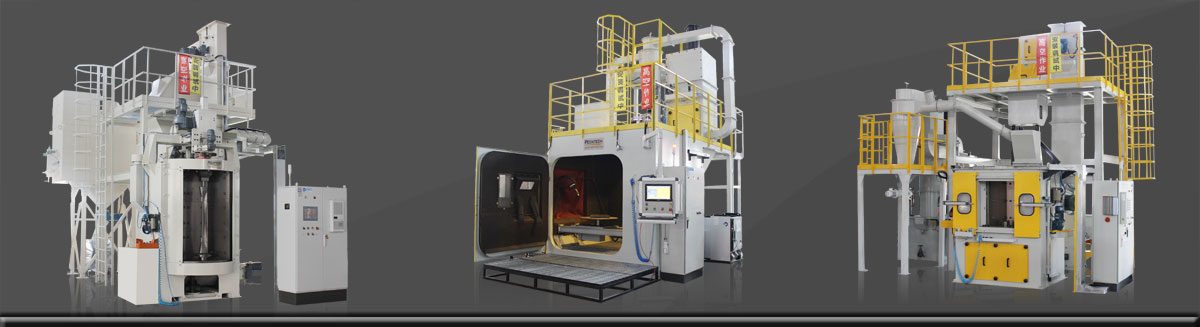
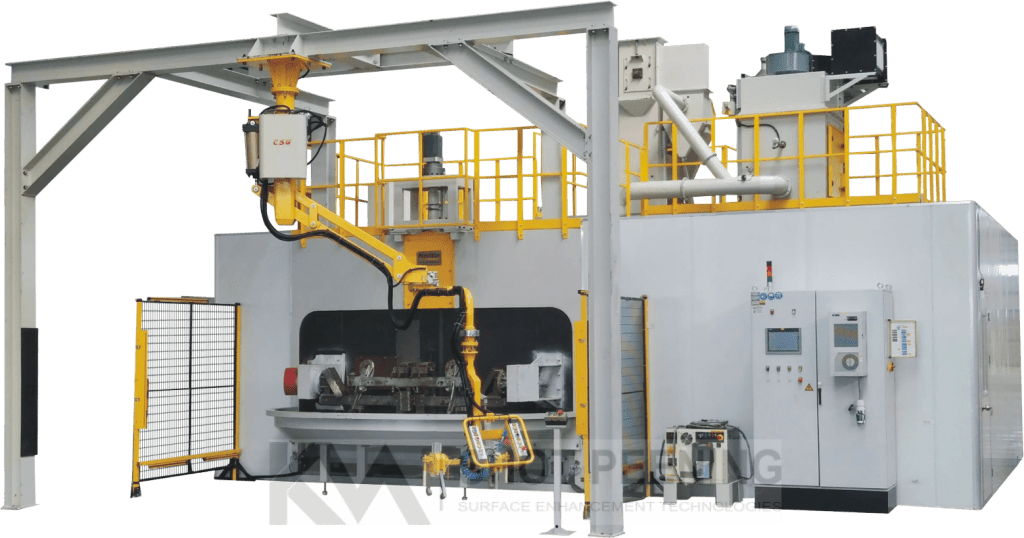
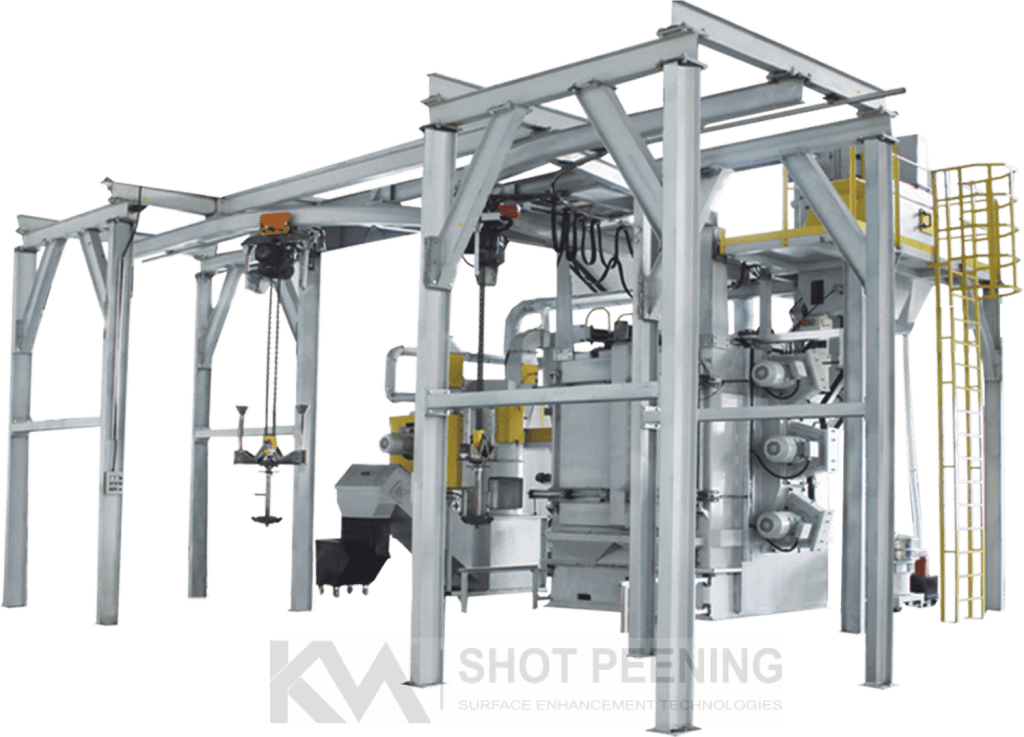
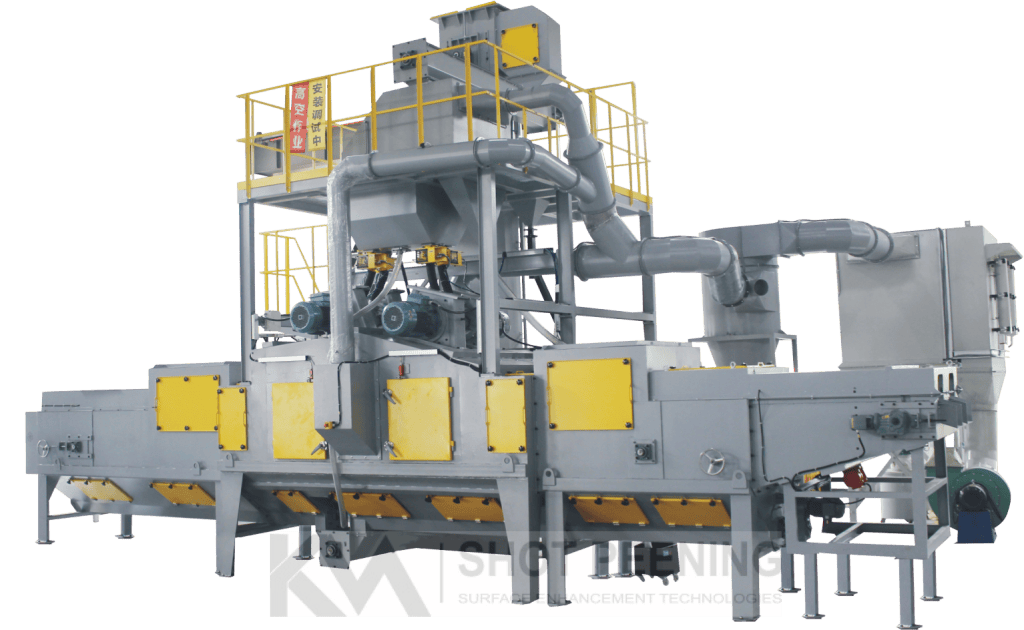
Shot peening is used in the construction and building industry, but not as widely as in the automotive and aerospace sectors. This is because most structural elements are subjected to static loads. However, shot peening offers significant advantages in critical components operating under high fatigue loads, impact, or vibration. In the construction and building industry, shot peening is a preferred surface treatment method for critical components operating under fatigue, impact, and vibration. It is particularly applied to heavy machinery, mining equipment, crane systems, railway components, and high-strength power transmission parts to extend service life and increase reliability. In contrast, shot peening is generally not necessary for standard steel structural elements carrying only static loads; in such applications, surface cleaning and coating preparation with shot blasting is usually sufficient.
Steel structure components
- Bridge connection elements
- High-strength bolts
- Crane rail connections
- Tower crane components
- Steel tower connection parts
Mining equipment
- Crusher shafts
- Conveyor system components
- Gears
- Drive shafts
- Chain links
- Rock drilling equipment
- Heavy-duty springs
Railway infrastructure
- Rail fasteners
- Scissor system components
- Axle components
- Suspension springs
- Brake system components
Difference from Shot Blasting
Shot blasting (sandblasting with steel balls) is very commonly used in this sector. However, its purpose is different:
Shot blasting: Provides surface preparation before painting by removing rust, scale, and dirt.
Shot peening: Increases fatigue resistance by creating compressive residual stresses on the surface with controlled impact.